Barinasuchus was an echo of a bygone age. Following the end of the Mesozoic, South America was dominated largely by archosaur apex predators. Only later, did more mammalian predators rise up to fulfil these niches. But for a while, South America was dominated by sebecids, the large, terrestrial crocodiles, comparable, if not larger than the largest bears.
Barinasuchus itself is something of a mystery. Much of its holotype skeleton was destroyed when roadworkers tried to excavate it. As a result, only the front portion of its skull is well documented. But what a skull.
By examining what we have of barinasuchus, we can tell that it have a very strong, bite and a skull designed for the stresses of grappling with terrestrial prey, rather than what is seen in modern crocodilians whose skulls are designed for a strong bite and clamping down, adaptions for dragging prey into the water.
Barinasuchus also has more than one type of teeth, and in its lower jaw are large fang-like teeth which fit neatly into a notch in its top jaw. With adaptions like these, it is easy for one to imagine this apex predator ambushing prey and delivering devastating bites its victims could not recover from.
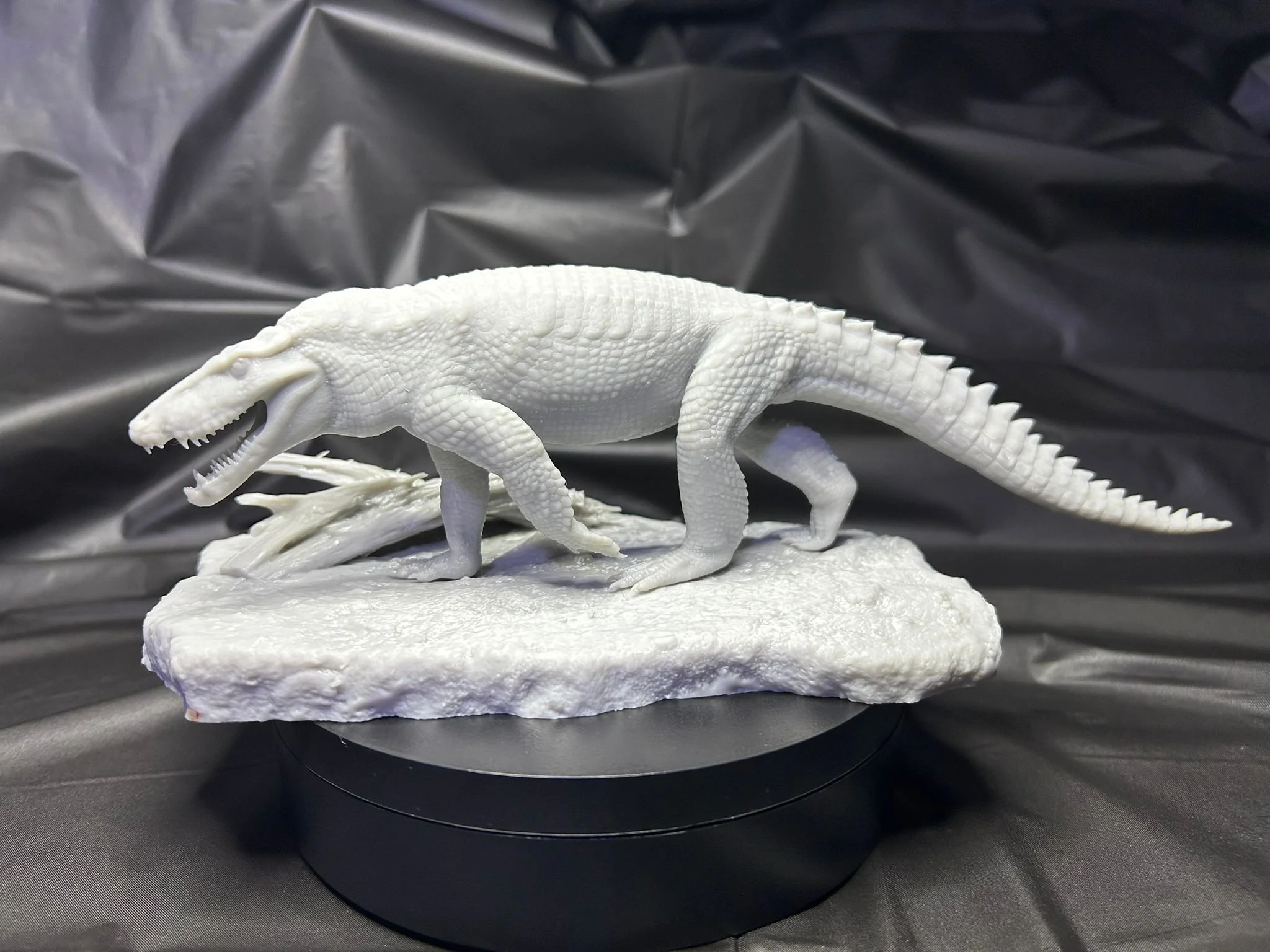
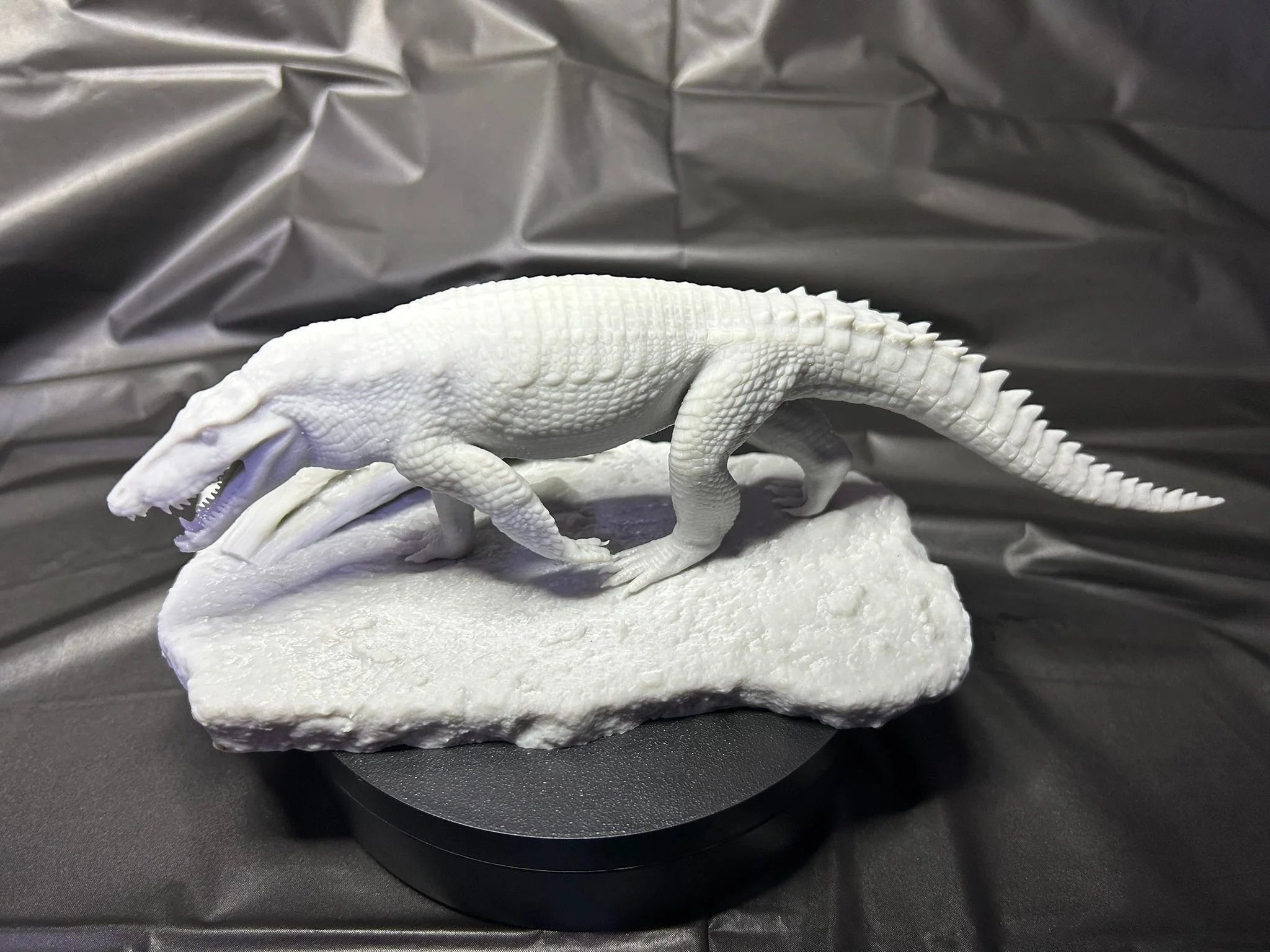
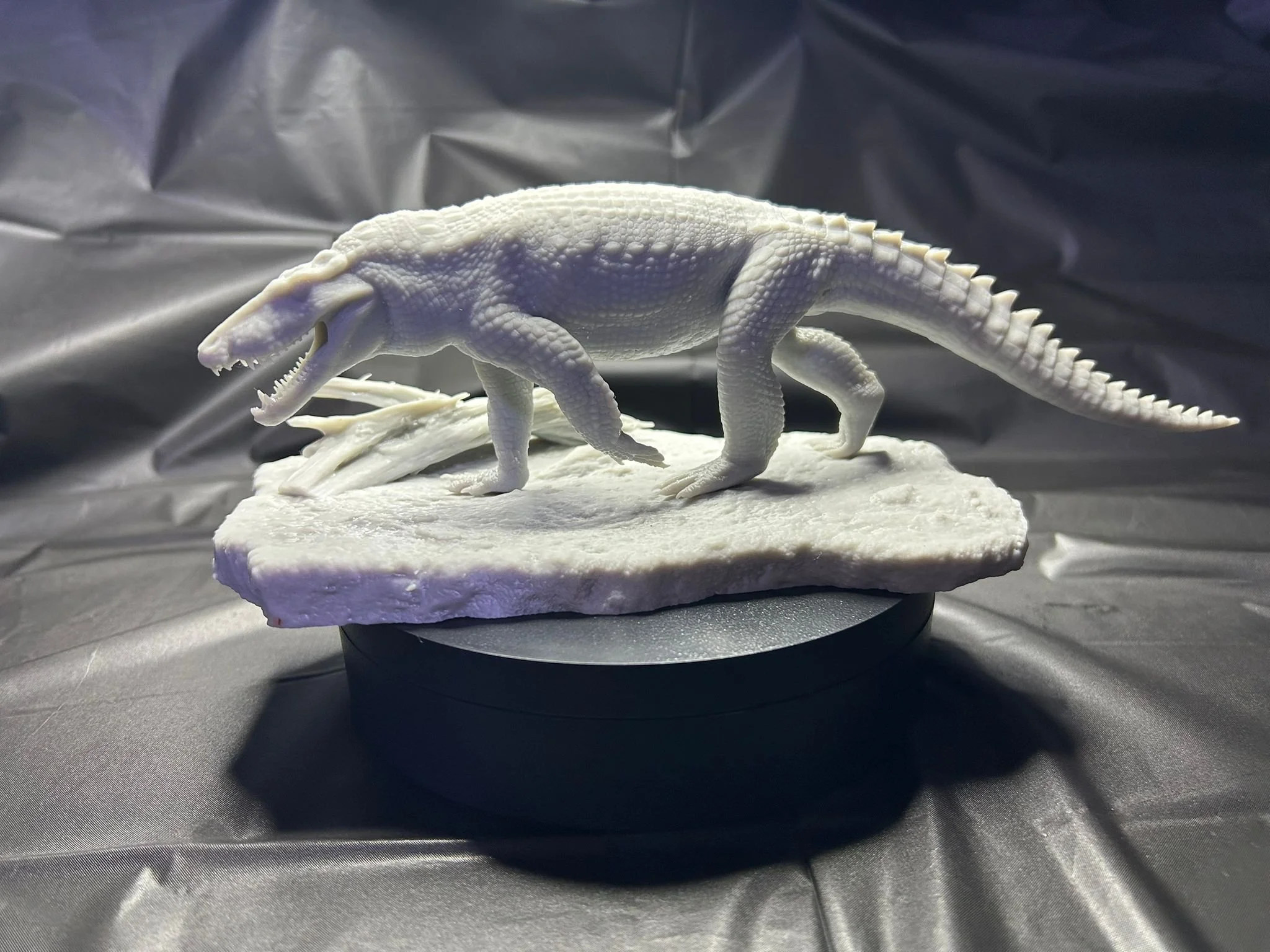
Our barinasuchus has been sculpted by the enormously talented Emi Nakasuka of Kex Studio, who have provided us a fantastic speculative look at what the rest of barinasuchus would have looked like based on other, closely-related sebecids. The long legs and easy gait this sculpt conveys shows the comfort with terrestrial locomotion these animals would have had, and the jaws, which are slightly ajar, display the formidable teeth.
Also on this sculpt is some incredible detail work. When deciding on a scale we went with an imposing 90cm. Assuming an 8 meter long animal (because we have few remains lengths are estimates) our model comes out at a 1:8.8 scale, so just shy of 1:9.
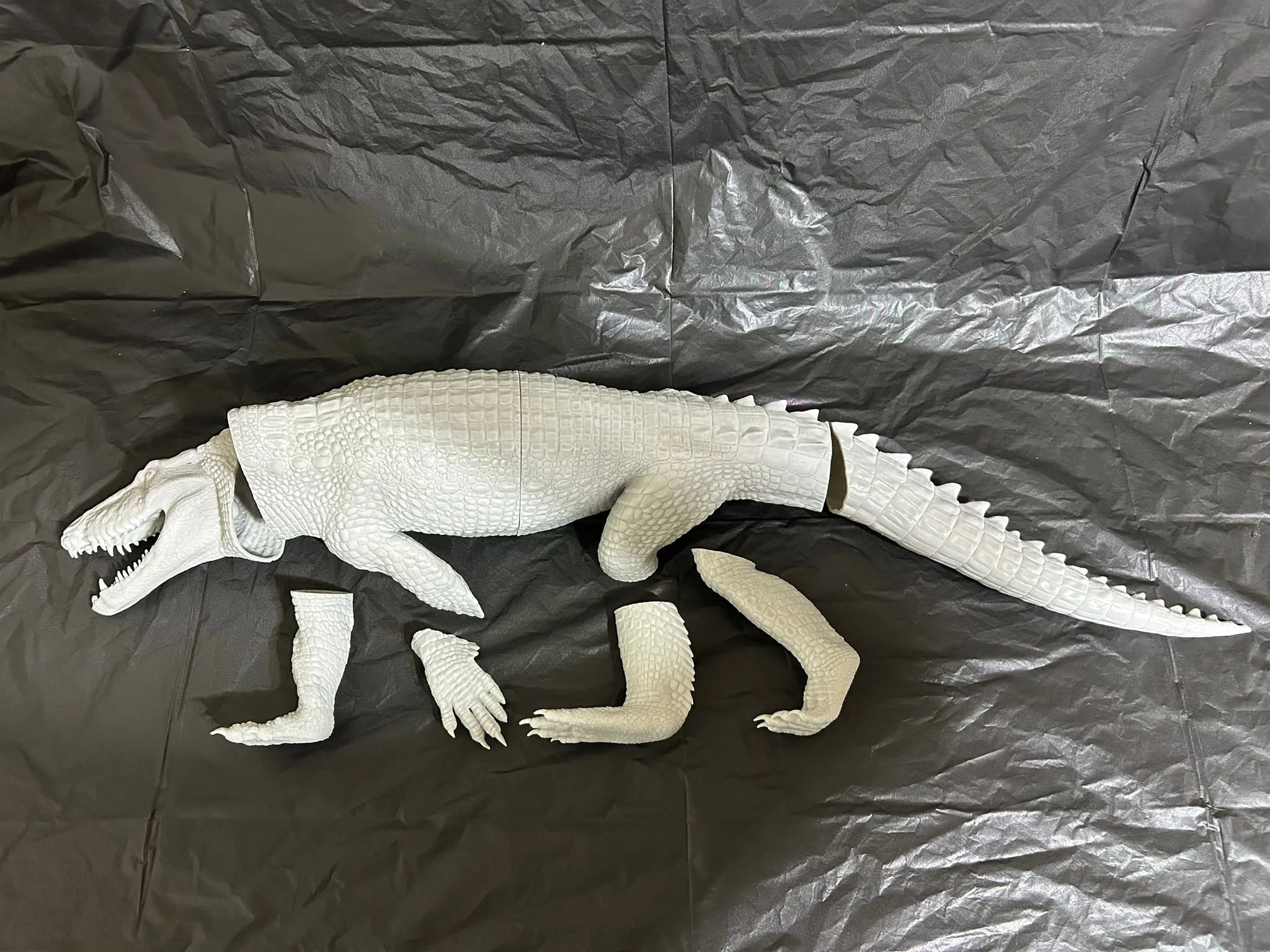
In creating this model, we had to get creative. Because of the way the model is structured, we went completely hollow. This allowed us to do two things: reduce the cost to the consumer, and make the kit better for the builder. We’ll elaborate.
By having no large, flat edges at the meeting points, when the kit prints, the natural suction of the 3D printer lifting the model as it prints has no surface area to warp. We experimented by heating edges etc, but we could never get the flush match we really wanted when we left large flat meeting points. We also looked at meeting pegs, but again, it proved more aggravation than benefit. Additionally, printing this way ensures that there is no chance for any trapped, uncured resin or loose supports rattling around on the inside.
So what you get is a simple kit where you can glue the edges, and simply pop the kit together. This is really ideal as it cuts down massively on sculpting around seam lines on a kit with a lot of scale detail.
As with the smaller version of this model, the kit stands freely and is well balanced.
What we are not offering however is the base which comes with the smaller model. At this size, that base would be….well, table -sized.
We hope you really enjoy this fantastic model of a rarely offered species.
Barinasuchus was an echo of a bygone age. Following the end of the Mesozoic, South America was dominated largely by archosaur apex predators. Only later, did more mammalian predators rise up to fulfil these niches. But for a while, South America was dominated by sebecids, the large, terrestrial crocodiles, comparable, if not larger than the largest bears.
Barinasuchus itself is something of a mystery. Much of its holotype skeleton was destroyed when roadworkers tried to excavate it. As a result, only the front portion of its skull is well documented. But what a skull.
By examining what we have of barinasuchus, we can tell that it have a very strong, bite and a skull designed for the stresses of grappling with terrestrial prey, rather than what is seen in modern crocodilians whose skulls are designed for a strong bite and clamping down, adaptions for dragging prey into the water.
Barinasuchus also has more than one type of teeth, and in its lower jaw are large fang-like teeth which fit neatly into a notch in its top jaw. With adaptions like these, it is easy for one to imagine this apex predator ambushing prey and delivering devastating bites its victims could not recover from.
Our barinasuchus has been sculpted by the enormously talented Emi Nakasuka of Kex Studio, who have provided us a fantastic speculative look at what the rest of barinasuchus would have looked like based on other, closely-related sebecids. The long legs and easy gait this sculpt conveys shows the comfort with terrestrial locomotion these animals would have had, and the jaws, which are slightly ajar, display the formidable teeth.
Also on this sculpt is some incredible detail work. When deciding on a scale we went with an imposing 90cm. Assuming an 8 meter long animal (because we have few remains lengths are estimates) our model comes out at a 1:8.8 scale, so just shy of 1:9.
In creating this model, we had to get creative. Because of the way the model is structured, we went completely hollow. This allowed us to do two things: reduce the cost to the consumer, and make the kit better for the builder. We’ll elaborate.
By having no large, flat edges at the meeting points, when the kit prints, the natural suction of the 3D printer lifting the model as it prints has no surface area to warp. We experimented by heating edges etc, but we could never get the flush match we really wanted when we left large flat meeting points. We also looked at meeting pegs, but again, it proved more aggravation than benefit. Additionally, printing this way ensures that there is no chance for any trapped, uncured resin or loose supports rattling around on the inside.
So what you get is a simple kit where you can glue the edges, and simply pop the kit together. This is really ideal as it cuts down massively on sculpting around seam lines on a kit with a lot of scale detail.
As with the smaller version of this model, the kit stands freely and is well balanced.
What we are not offering however is the base which comes with the smaller model. At this size, that base would be….well, table -sized.
We hope you really enjoy this fantastic model of a rarely offered species.