Barinasuchus represents a powerful echo of a prehistoric world long gone. After the Mesozoic, South America remained a stronghold for archosaur apex predators, with massive terrestrial crocodiles—sebecids—dominating the landscape long before mammalian carnivores rose to fill those niches. These land‑dwelling giants rivalled, and in some cases exceeded, the size of modern bears.
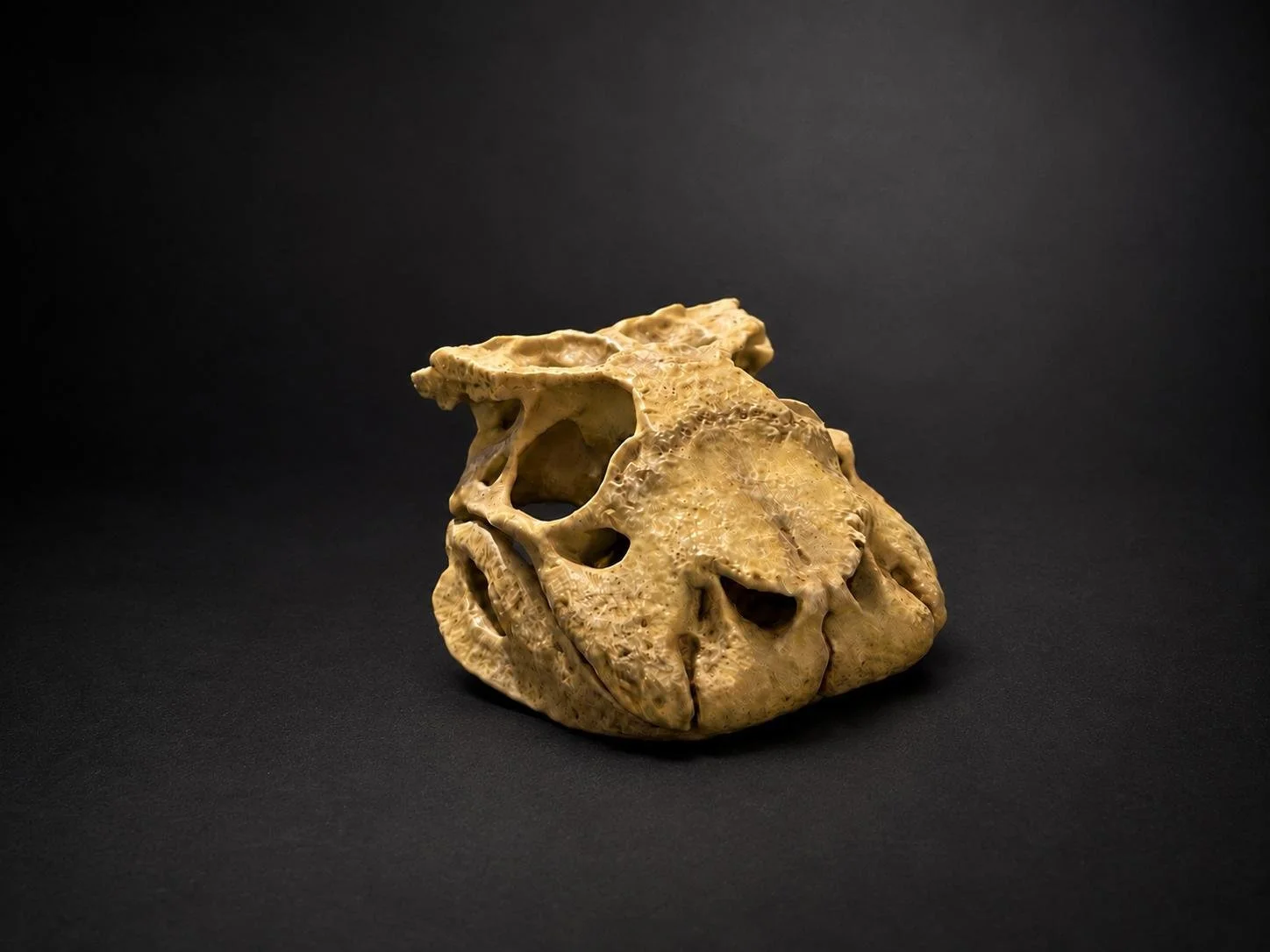
Barinasuchus itself is shrouded in mystery. Much of its holotype was destroyed during an attempted road excavation, leaving only the front portion of the skull well documented. Yet even this fragment reveals a formidable predator. Its skull structure suggests an exceptionally strong bite adapted for grappling with terrestrial prey—very different from modern crocodilians, whose skulls are built for clamping and dragging prey into water.
Barinasuchus also possessed varied dentition, including large fang‑like lower teeth that locked neatly into notches in the upper jaw. Features like these paint a vivid picture of an apex predator capable of devastating ambush attacks on land.
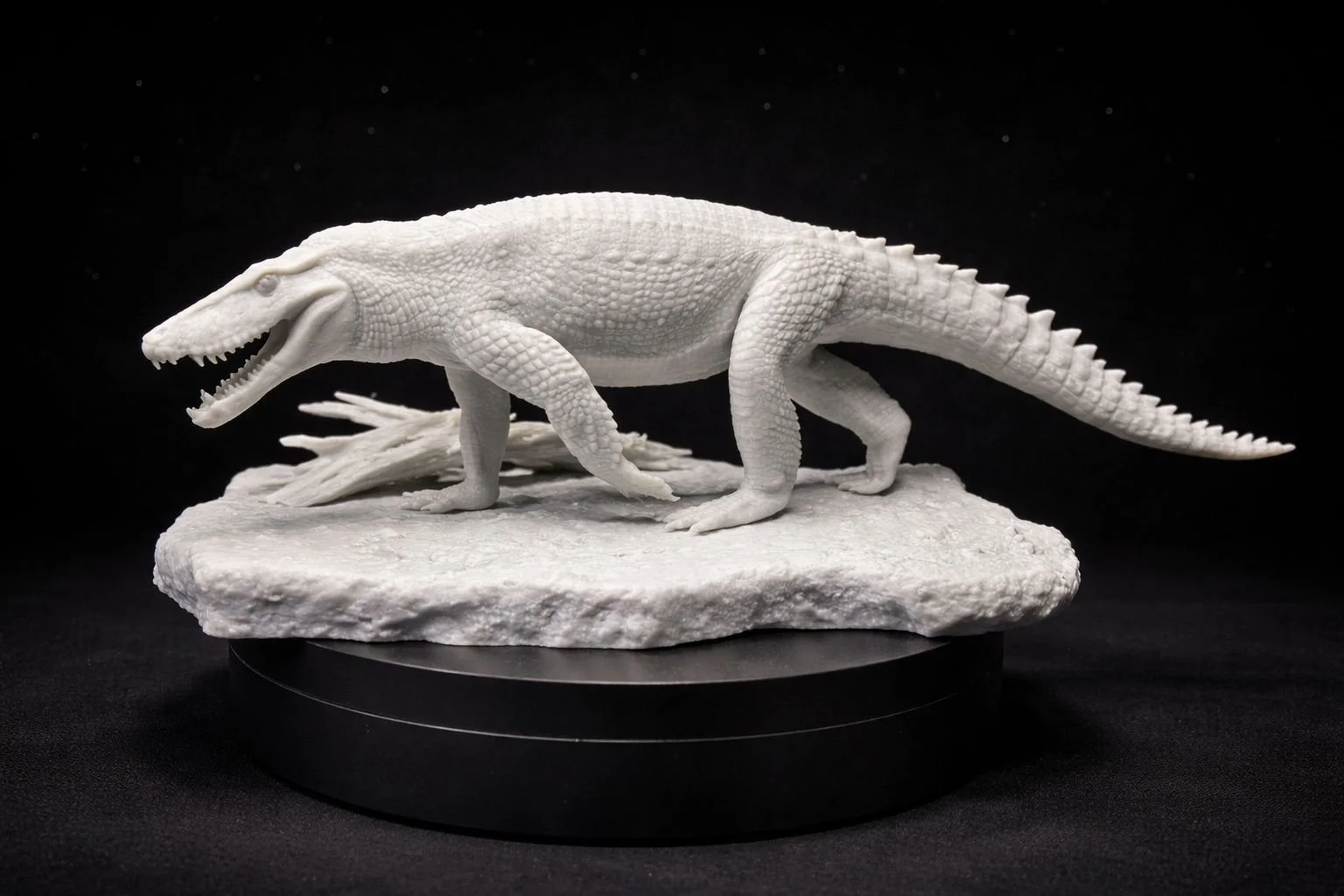
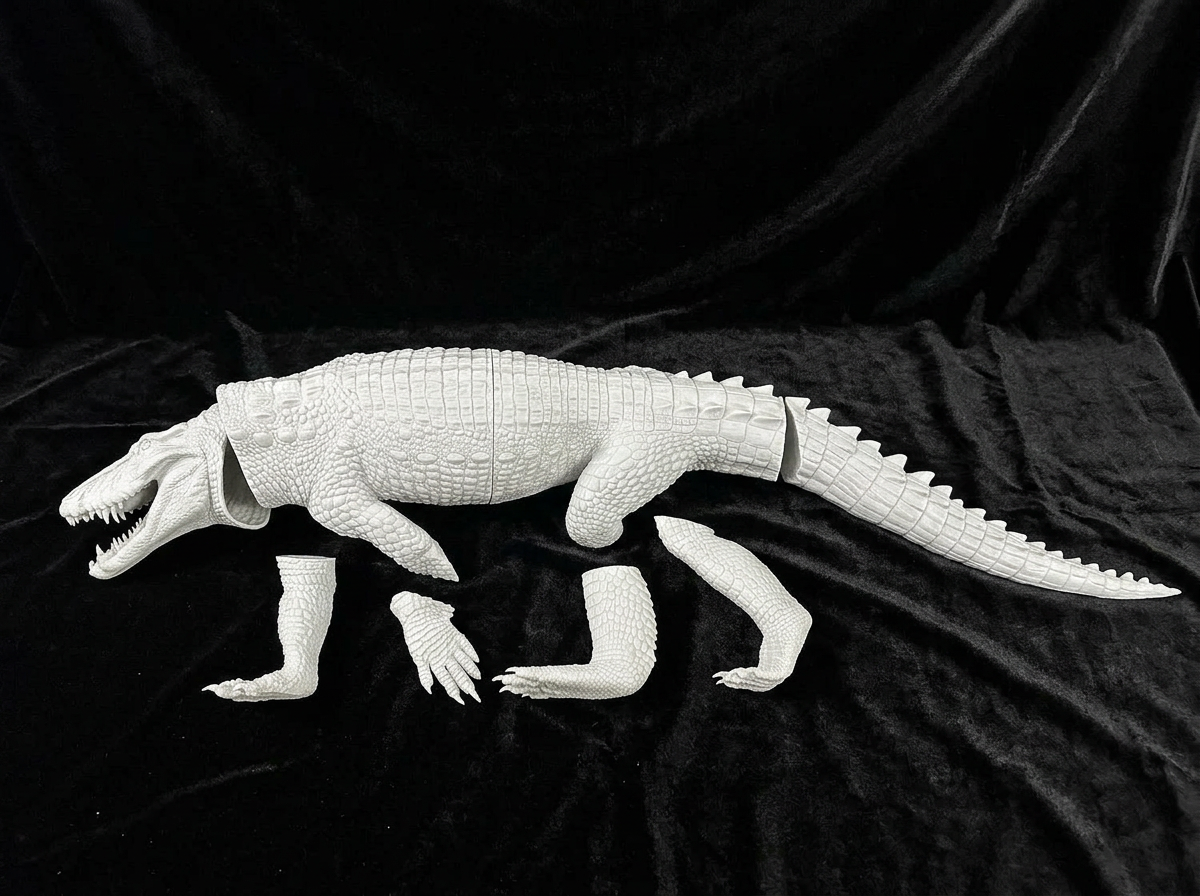
Our Barinasuchus model, sculpted by the exceptionally talented Emi Nakasuka of Kex Studio, offers a scientifically informed and beautifully speculative reconstruction based on closely related sebecids. The long legs, confident terrestrial posture, and slightly open jaws showcase both agility and the animal’s fearsome bite.
The sculpt includes remarkable fine‑scale detailing. We chose a 1:10 scale to ensure the intricate wrinkles, osteoderms, and skin textures remain visible to the naked eye.
The 1:33 scale model measures approximately 24 cm long, printed in solid resin at 16K resolution to preserve every detail without requiring cuts to the model. It includes the pictured base and stands freely thanks to excellent balance.
For collectors seeking something truly impressive, we also offer a massive 1:8 scale kit, spanning 90 cm in length across eight pieces. This version does not include a base and is ideal for advanced builders and display enthusiasts.
This Barinasuchus sculpture is a standout piece for palaeoart collectors, dinosaur model enthusiasts, and anyone fascinated by prehistoric predators and scientifically grounded reconstructions.
Barinasuchus represents a powerful echo of a prehistoric world long gone. After the Mesozoic, South America remained a stronghold for archosaur apex predators, with massive terrestrial crocodiles—sebecids—dominating the landscape long before mammalian carnivores rose to fill those niches. These land‑dwelling giants rivalled, and in some cases exceeded, the size of modern bears.
Barinasuchus itself is shrouded in mystery. Much of its holotype was destroyed during an attempted road excavation, leaving only the front portion of the skull well documented. Yet even this fragment reveals a formidable predator. Its skull structure suggests an exceptionally strong bite adapted for grappling with terrestrial prey—very different from modern crocodilians, whose skulls are built for clamping and dragging prey into water.
Barinasuchus also possessed varied dentition, including large fang‑like lower teeth that locked neatly into notches in the upper jaw. Features like these paint a vivid picture of an apex predator capable of devastating ambush attacks on land.
Our Barinasuchus model, sculpted by the exceptionally talented Emi Nakasuka of Kex Studio, offers a scientifically informed and beautifully speculative reconstruction based on closely related sebecids. The long legs, confident terrestrial posture, and slightly open jaws showcase both agility and the animal’s fearsome bite.
The sculpt includes remarkable fine‑scale detailing. We chose a 1:10 scale to ensure the intricate wrinkles, osteoderms, and skin textures remain visible to the naked eye.
The 1:33 scale model measures approximately 24 cm long, printed in solid resin at 16K resolution to preserve every detail without requiring cuts to the model. It includes the pictured base and stands freely thanks to excellent balance.
For collectors seeking something truly impressive, we also offer a massive 1:8 scale kit, spanning 90 cm in length across eight pieces. This version does not include a base and is ideal for advanced builders and display enthusiasts.
This Barinasuchus sculpture is a standout piece for palaeoart collectors, dinosaur model enthusiasts, and anyone fascinated by prehistoric predators and scientifically grounded reconstructions.