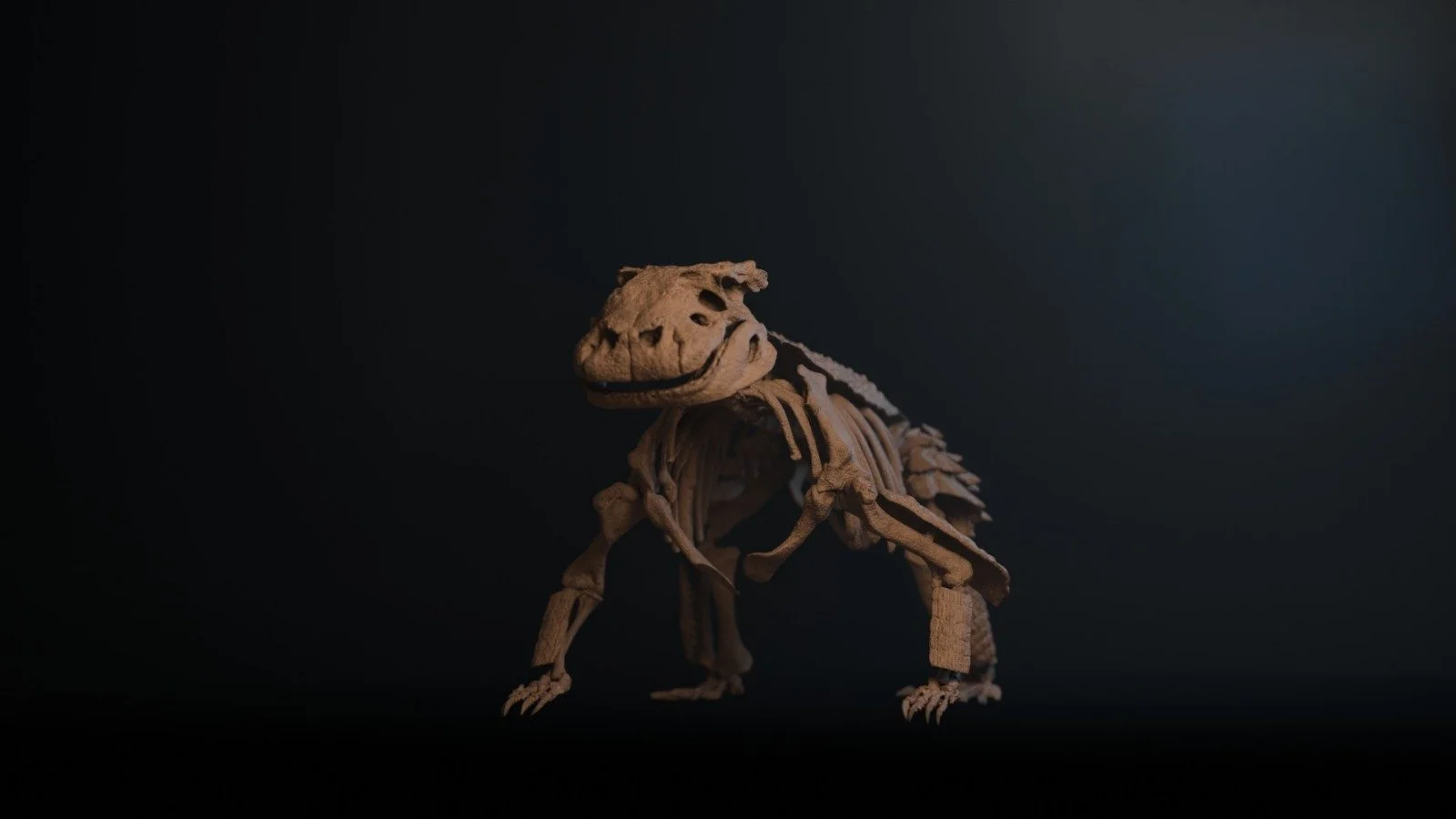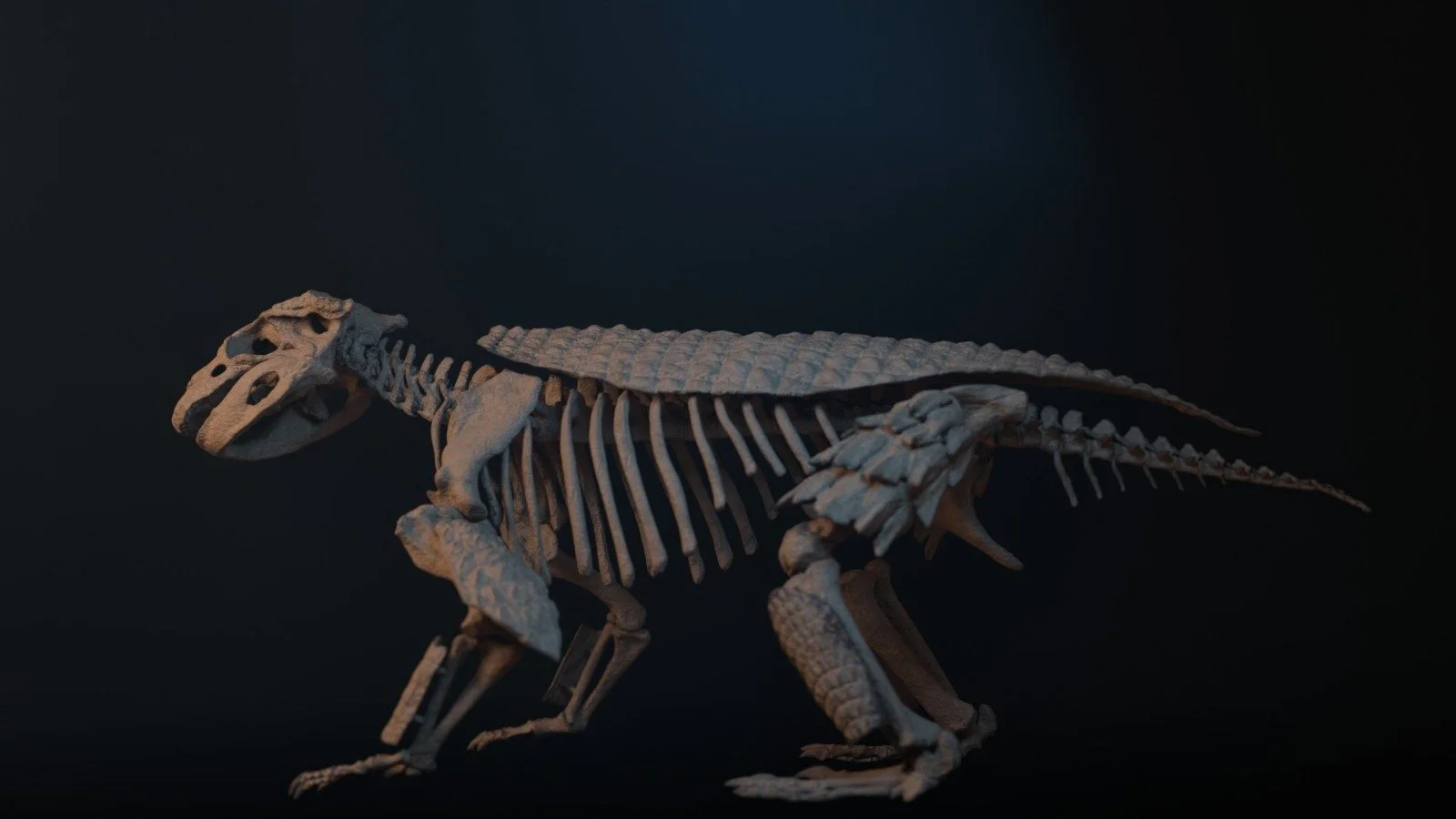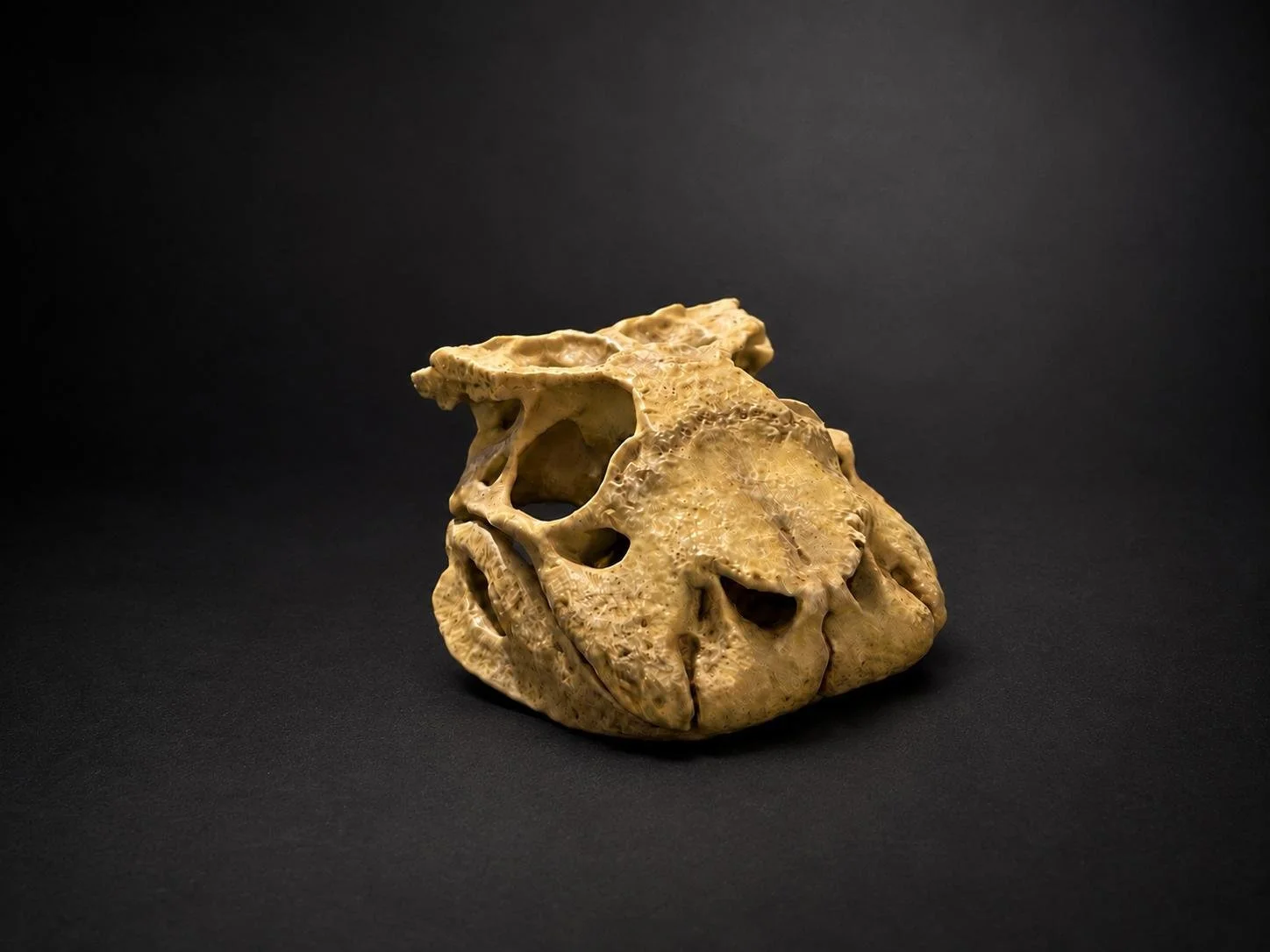
Simosuchus was one of the most unusual crocodyliforms of the Late Cretaceous, living in Madagascar around 70 million years ago. Unlike the long‑snouted aquatic predators we associate with crocodiles today, Simosuchus evolved a short, box‑shaped skull, leaf‑shaped teeth, and a compact, heavily armoured body. These features point to a primarily herbivorous lifestyle — a remarkable departure from typical crocodyliform diets. Its skull reveals a powerful bite adapted for cropping vegetation, while the broad snout and complex jaw musculature suggest selective feeding on tough plants. Fossils place Simosuchus in forested floodplains, filling a unique ecological niche and offering scientists a rare glimpse into the diversity of crocodyliform evolution just before the end‑Cretaceous extinction.
A life‑sized Simosuchus skull is an exceptional teaching tool because it challenges assumptions about what crocodile relatives “should” look like. Students can explore tooth shape, cranial proportions, and feeding adaptations to understand how evolution can produce unexpected solutions. It’s ideal for lessons on ecological diversity, convergent evolution, and the wide range of lifestyles represented within ancient reptile groups.
This replica is sculpted with exceptional accuracy and detail by David at Nova Studios, whose craftsmanship captures the distinctive boxy geometry and character of this remarkable species. The result is a museum‑quality piece that brings Simosuchus to life for classrooms, exhibits, and collectors alike.
Simosuchus was one of the most unusual crocodyliforms of the Late Cretaceous, living in Madagascar around 70 million years ago. Unlike the long‑snouted aquatic predators we associate with crocodiles today, Simosuchus evolved a short, box‑shaped skull, leaf‑shaped teeth, and a compact, heavily armoured body. These features point to a primarily herbivorous lifestyle — a remarkable departure from typical crocodyliform diets. Its skull reveals a powerful bite adapted for cropping vegetation, while the broad snout and complex jaw musculature suggest selective feeding on tough plants. Fossils place Simosuchus in forested floodplains, filling a unique ecological niche and offering scientists a rare glimpse into the diversity of crocodyliform evolution just before the end‑Cretaceous extinction.
A life‑sized Simosuchus skull is an exceptional teaching tool because it challenges assumptions about what crocodile relatives “should” look like. Students can explore tooth shape, cranial proportions, and feeding adaptations to understand how evolution can produce unexpected solutions. It’s ideal for lessons on ecological diversity, convergent evolution, and the wide range of lifestyles represented within ancient reptile groups.
This replica is sculpted with exceptional accuracy and detail by David at Nova Studios, whose craftsmanship captures the distinctive boxy geometry and character of this remarkable species. The result is a museum‑quality piece that brings Simosuchus to life for classrooms, exhibits, and collectors alike.