Edmontosaurus was one of the most successful herbivorous dinosaurs of the Late Cretaceous, roaming North America around 73–66 million years ago. A large hadrosaur, it could reach 12 metres in length and weigh several tonnes, yet it wasn’t a lumbering giant — its anatomy shows a surprisingly dynamic animal. Edmontosaurus had a long, muscular tail for balance, a flexible spine, and powerful hind limbs capable of both quadrupedal grazing and bipedal running when threatened. Its broad, (superficially) duck‑like snout and complex battery of grinding teeth made it a highly efficient herbivore, able to process tough vegetation that many other dinosaurs couldn’t handle. Fossil evidence, including skin impressions, suggests a textured, scaly hide and a robust build suited to life in herds.
A life‑sized Edmontosaurus hoof is an exceptional teaching object because it grounds all of this abstract information in physical reality. Students can immediately grasp the scale, weight distribution, and biomechanics of a large herbivore simply by examining the structure of the hoof. It becomes easier to discuss locomotion, trackways, herd behaviour, and how palaeontologists interpret fossil footprints. A single, tangible piece of anatomy turns a distant prehistoric animal into something real, relatable, and scientifically rich — perfect for sparking curiosity in a natural history class.
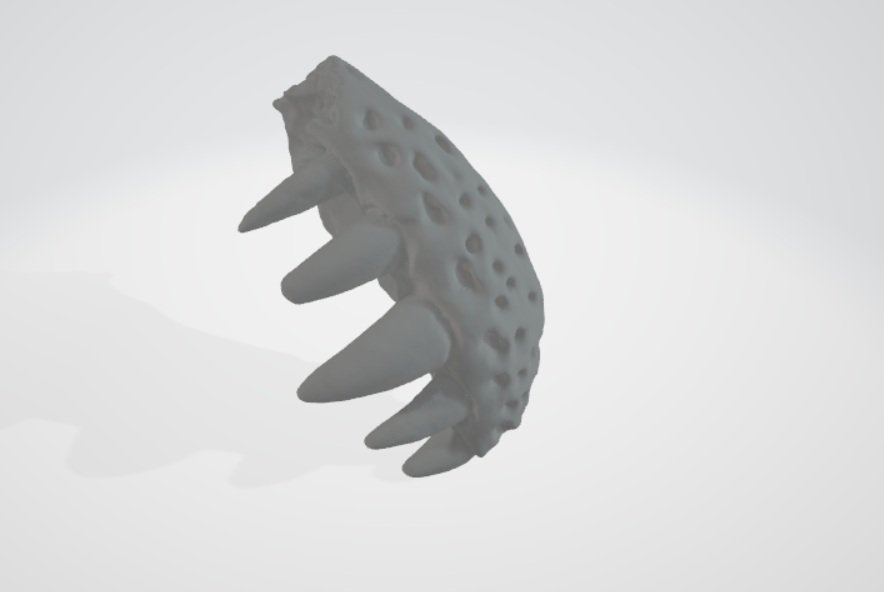
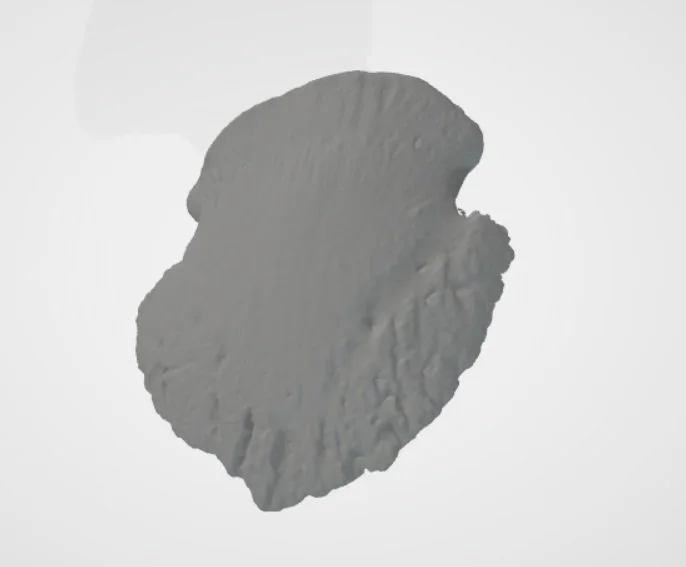
The hoof we provide comes directly from High Plains Paleontology and is created from a high‑resolution scan taken in their lab. A portion of every sale goes toward supporting their ongoing scientific and fieldwork efforts, making it both an educational resource and a contribution to real palaeontology.
This offering comes in its raw unpainted, scanned form direct from the lab. Whilst not as granular in detail as some of our other offerings, we think it adds charm and authenticity.
Edmontosaurus was one of the most successful herbivorous dinosaurs of the Late Cretaceous, roaming North America around 73–66 million years ago. A large hadrosaur, it could reach 12 metres in length and weigh several tonnes, yet it wasn’t a lumbering giant — its anatomy shows a surprisingly dynamic animal. Edmontosaurus had a long, muscular tail for balance, a flexible spine, and powerful hind limbs capable of both quadrupedal grazing and bipedal running when threatened. Its broad, (superficially) duck‑like snout and complex battery of grinding teeth made it a highly efficient herbivore, able to process tough vegetation that many other dinosaurs couldn’t handle. Fossil evidence, including skin impressions, suggests a textured, scaly hide and a robust build suited to life in herds.
A life‑sized Edmontosaurus hoof is an exceptional teaching object because it grounds all of this abstract information in physical reality. Students can immediately grasp the scale, weight distribution, and biomechanics of a large herbivore simply by examining the structure of the hoof. It becomes easier to discuss locomotion, trackways, herd behaviour, and how palaeontologists interpret fossil footprints. A single, tangible piece of anatomy turns a distant prehistoric animal into something real, relatable, and scientifically rich — perfect for sparking curiosity in a natural history class.
The hoof we provide comes directly from High Plains Paleontology and is created from a high‑resolution scan taken in their lab. A portion of every sale goes toward supporting their ongoing scientific and fieldwork efforts, making it both an educational resource and a contribution to real palaeontology.
This offering comes in its raw unpainted, scanned form direct from the lab. Whilst not as granular in detail as some of our other offerings, we think it adds charm and authenticity.